
SEO Audit Checklist: What Every Business Should Review
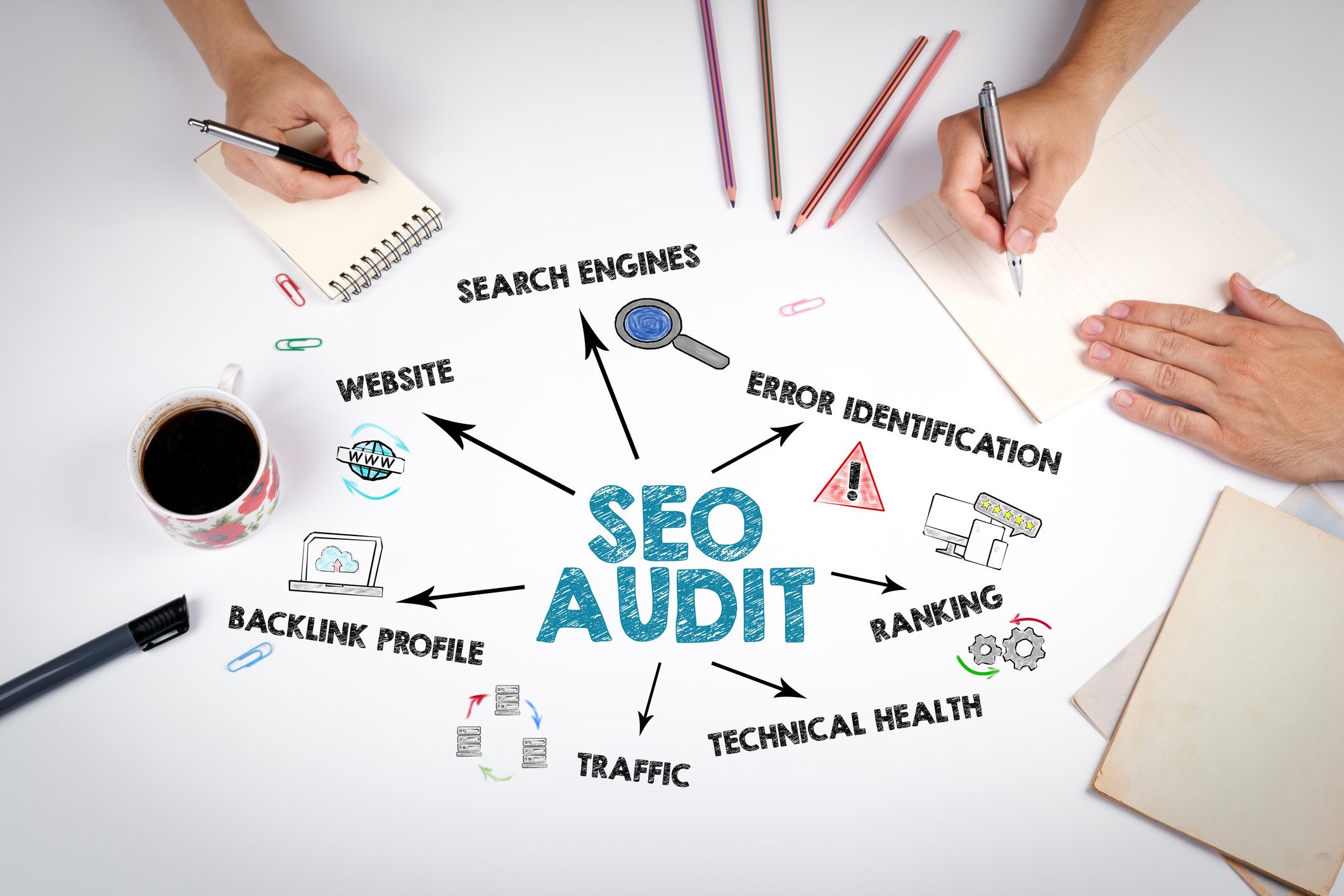
We tell clients the same thing every time a new project kicks off: before we build anything new, we need to know exactly where things stand. An SEO audit is how we get that answer. It is a structured review of a website's technical health, content quality, and authority signals, and it gives us a clear roadmap of what to fix first, what to improve over time, and what is already working well.
A good SEO audit is not something we run once and forget. We recommend revisiting it whenever a business launches a new site, notices a drop in traffic or rankings, or wants to prepare for a competitive push. Below, we walk through the core areas we review in every audit we run, and the questions every business should be asking about its own site.
1. Crawlability and Indexing
Before anything else, we confirm that search engines can actually find and access a site's pages. This is the foundation everything else depends on.
What we check:
Robots.txt rules, to make sure important pages are not accidentally blocked
Crawl errors reported in Google Search Console
Orphan pages that have no internal links pointing to them
Indexing status, confirming valuable pages are indexed and low value or duplicate pages are not
XML sitemap accuracy, making sure it lists current, live URLs only
If search engines cannot crawl or index a page, nothing else on this list matters. This is always where we start.
2. Core Web Vitals and Site Speed
Page experience continues to play a real role in how sites perform, both for users and for search visibility. We look closely at the technical performance metrics Google uses to evaluate user experience.
What we check:
Largest Contentful Paint, ideally under 2.5 seconds
Interaction to Next Paint, ideally under 200 milliseconds
Cumulative Layout Shift, ideally under 0.1
Server response times and image compression
Mobile performance specifically, since most indexing today is mobile first
We test key page types separately, including the homepage, category pages, and individual content pages, since performance can vary significantly across a site.
3. Mobile Usability
Because most search engines index the mobile version of a site first, we treat mobile experience as a core ranking factor rather than an afterthought.
What we check:
Responsive design across screen sizes
Readable font sizes without zooming
Touch friendly navigation and buttons
Fast loading on mobile networks
A site that looks great on desktop but is clunky on a phone is going to lose both users and rankings.
4. On Page SEO Fundamentals
On page elements are still some of the most direct signals we can control, and they remain essential even as search evolves.
What we check:
Title tags, kept close to sixty characters and written to match search intent
Meta descriptions, generally around one hundred fifty five characters
A single, clear H1 on every page, with a logical heading structure beneath it
Natural keyword usage that avoids stuffing
Clean, descriptive URL structure
We are looking for consistency here. Every page should clearly signal what it is about, both to a visitor and to a search engine.
5. Content Quality and Topical Authority
Search engines, and increasingly AI systems, reward content that demonstrates real depth and expertise on a topic rather than isolated pages built around single keywords.
What we check:
Whether content answers the questions users are actually asking
Coverage across a topic cluster, not just one page
Signs of experience, expertise, authority, and trust, often referred to as E E A T
Outdated content that needs refreshing or consolidating
Duplicate or thin content that adds little value
This is often where we find the biggest opportunities. A handful of strong, comprehensive pages usually outperforms dozens of shallow ones.
6. Internal Linking
Internal links help both users and search engines understand which pages matter most on a site, and they distribute authority across a domain.
What we check:
Overall internal link structure and navigation
Whether high value pages receive enough internal links
Broken internal links
Anchor text, making sure it is descriptive without being overly keyword stuffed
Click depth, aiming to keep important pages within three or four clicks of the homepage
7. Backlink Profile and Off Page Authority
External signals still matter for building trust and credibility in a competitive niche.
What we check:
Overall backlink quality and relevance
Toxic or spammy links that could be doing harm
Competitor backlink gaps and opportunities
Brand mentions across the web, even when they are not linked
8. AI Search and AEO/GEO Readiness
AI-generated answers are changing how people discover and evaluate brands across platforms including Google AI Overviews, ChatGPT, Gemini, Claude, and Perplexity. That means a modern search audit should look beyond traditional rankings to understand whether a brand is positioned to surface across AI-driven search environments.
What we check:
Structured data and schema markup implementation
Content architecture and clarity for AI readability and citation potential
Entity and authority signals that help establish the brand as a credible source
Brand mentions and citations across relevant sources
Whether the brand is actually being surfaced as a trustworthy source in AI-generated answers across major platforms
Traditional SEO remains an important foundation, but AI search introduces another layer of visibility to evaluate. Auditing both helps businesses understand not only where they rank, but where and how their brand appears as search behavior evolves.
Turning an Audit Into Action
An audit is only useful if it leads somewhere. Once we complete a review, we prioritize findings into a clear roadmap, usually spanning three to six months, starting with quick technical fixes and moving into longer term content and authority building work. The goal is never just to produce a list of problems. It is to give a business a clear, practical path toward stronger visibility.
Frequently Asked Questions About SEO Audits
How often should a business run an SEO audit?
Most businesses benefit from a full audit at least once or twice a year, along with a fresh review any time there is a major site change, a noticeable drop in traffic, or a new competitive challenge.
What tools are used during an SEO audit?
Common tools include Google Search Console and Google Analytics 4 for performance data, along with crawling tools like Screaming Frog and keyword research platforms like Semrush or Ahrefs.
What is the difference between a technical audit and a content audit?
A technical audit focuses on whether search engines can crawl, index, and load a site efficiently. A content audit focuses on whether the actual pages answer user intent, demonstrate expertise, and avoid duplication or thin coverage.
Why does AI search readiness matter in an SEO audit now?
Search results increasingly include AI generated summaries and direct answers, so a site that is not structured with clear, extractable content and proper schema markup risks losing visibility even if its traditional rankings are strong.
Can a business run its own SEO audit, or does it need a specialist?
A business can absolutely start with a basic self review of the fundamentals, but a full audit covering technical health, content depth, backlinks, and AI readiness usually benefits from an experienced team that can prioritize findings correctly.
Ai Media Group helps businesses uncover exactly what is holding their search visibility back through comprehensive, actionable SEO audits. If your site is due for a checkup, contact us to get started.



Performance, engineered.